



[lwptoc]
When snow melts and the ground starts to thaw, many homes reveal changes that were hidden during colder months. Foundation settlement after winter can appear slowly, yet the warning signs often affect comfort, safety, and your peace of mind.
At Enrique Hernandez Construction LLC, we want homeowners to understand what causes these shifts and what to do next. With the right knowledge, you can spot early changes, protect your property, and make smarter repair decisions.
Signs That Show Seasonal Foundation Movement
Some of the first clues appear inside the house. You may feel floors slope slightly, notice doors rubbing, or see small cracks near windows and trim. These changes often point to foundation settlement after winter, especially when the soil below your home has moved unevenly.
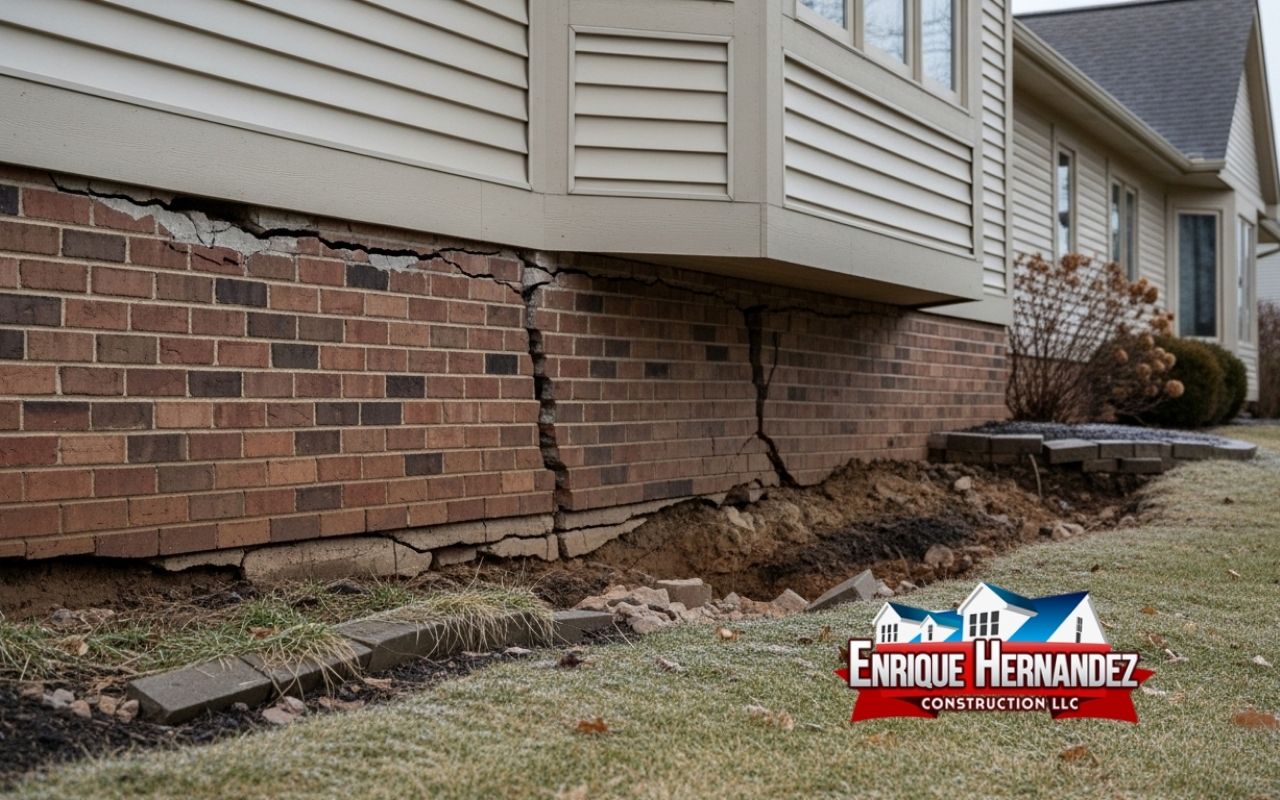
Outside, the signs can be just as clear. Gaps near frames, cracks in masonry, and small separations where different parts of the home meet can all suggest seasonal foundation shifting. Catching these changes early can help limit more serious repair work later.
- Uneven floors after winter that make furniture wobble
- Cracks in drywall, plaster, brick, or concrete
- Doors or windows that stick or no longer close well
- Visible gaps around baseboards, frames, or exterior joints
For more warning signs, read our guide on foundation problems in your home.
How Winter Frost Changes the Soil Below
Winter soil movement begins when moisture in the ground freezes and expands. As that frozen soil pushes upward, parts of the foundation can lift. Later, when temperatures rise, the ice melts and the soil settles again, but not always evenly.
This cycle puts stress on footings, slabs, and walls. Clay and silt soils usually hold more water, so they often shift more than sandy soil. Because of that, one corner of a house may move differently from another, which creates pressure across the structure.
At Enrique Hernandez Construction LLC, we often remind homeowners that frost damage is not always dramatic at first. Small seasonal changes can build over time and become harder to ignore after a few winters.
Common Reasons Foundations Shift After Cold Months
Melting snow does not always soak into the ground evenly. One side of a home may stay wetter for longer, while another dries faster. That uneven moisture pattern can cause soil to shrink, soften, or compact at different rates.
Poor drainage also adds to the problem. Clogged gutters, short downspouts, and low grading can send water toward the house instead of away from it. As a result, foundation settlement after winter becomes more likely because the supporting soil loses balance.
Landscaping plays a role as well. Trees and large shrubs can pull moisture from the soil, leaving some sections drier than others. When freeze and thaw cycles affect those areas, the result may be uneven floors after winter or visible cracking around the home.
What Frost Heave Can Do to Structural Stability
Frost heave foundation signs often start small, but they should not be ignored. When frozen ground pushes upward, concrete can crack, joints can separate, and water can enter those weak points. Once that water freezes again, the damage can spread further.
The problem is not only the crack itself. When one section of the foundation rises, other sections may bear more weight than they should. This can affect beams, joists, and wall alignment, which may lead to sagging floors or growing gaps around openings.
We recommend reviewing common repair options early, before those changes worsen. Our article on common foundation issues and solutions explains several issues homeowners may face.
Why Check Your Foundation Soon After Winter?
Early spring is one of the best times to inspect your home. As the ground thaws, signs of movement become easier to spot, and small issues can be handled before they grow into larger structural concerns.
A careful inspection can reveal cracks, drainage trouble, and moisture patterns that are easy to miss during daily life. Seasonal foundation shifting may seem minor at first, yet early action often means simpler repairs and lower long-term costs.
At Enrique Hernandez Construction LLC, we believe timely inspections help homeowners make calm, informed choices instead of waiting until a small issue becomes an urgent repair.
Practical Steps That Help Reduce Future Movement
While weather cannot be controlled, many risk factors around the home can. The goal is to keep soil moisture more even and direct water away from the foundation throughout the year.
- Keep gutters clear so meltwater flows properly
- Extend downspouts away from the foundation line
- Maintain grading that slopes away from the home
- Watch large trees and roots near foundation walls
- Water the soil evenly during very dry periods
These simple habits can lower the chances of winter soil movement causing future trouble. You can also explore our foundation repair tips for home stability for more ways to protect your property.
Frequently Asked Questions
What causes foundation settlement after winter?
It usually happens when frozen soil expands during winter and then settles unevenly as it thaws. Extra moisture, poor drainage, and changing soil types can make that movement worse.
Are uneven floors after winter always a foundation problem?
Not always, but they should be checked. Floor changes can come from framing issues, moisture problems, or settlement, so an inspection helps identify the real cause.
What are common frost heave foundation signs?
Look for cracks in concrete or drywall, sticking doors, gaps around windows, and sections of the home that seem slightly raised or out of line after cold weather.
Can seasonal foundation shifting fix itself?
Some minor movement may settle down, but repeated seasonal changes can still weaken the structure over time. It is safer to monitor the issue and address the cause early.
When should homeowners schedule an inspection?
Spring is usually the best time because thawing soil reveals recent movement. A post-winter inspection gives a clearer picture of any new damage or shifting.
Building Long-Term Stability Through Smart Care
Protecting your home takes steady attention in every season. Foundation settlement after winter is easier to manage when you treat drainage, grading, inspections, and repairs as part of regular home care rather than a one-time task.
Enrique Hernandez Construction LLC works with homeowners who want lasting results, not temporary fixes. By staying alert to frost heave foundation signs and responding early, you can reduce risk, protect your investment, and keep your home more stable year-round.
- Inspect the perimeter of your home each spring
- Fill low spots in soil before water collects there
- Track new cracks so you can spot changes faster
- Call for help when signs keep returning each season
With a clear plan and consistent upkeep, Enrique Hernandez Construction LLC can help you respond to foundation settlement after winter before it leads to larger structural repairs.