



[lwptoc]
Spring is the right time to look closely at your home’s base. As soil thaws and rain returns, small changes can turn into bigger problems. A careful foundation inspection checklist for spring helps you spot early warning signs before damage grows.
At Enrique Hernandez Construction LLC, we believe a simple seasonal check can protect your comfort, safety, and budget. When you review cracks, drainage, and moisture, you give your home a stronger start for the months ahead.
Why Spring Is the Best Time to Check
After winter, your home may face new pressure from wet soil, shifting ground, and changing temperatures. That is why a spring home foundation check matters so much. It helps you notice movement, surface damage, and drainage issues before they become expensive repairs.
During this season, it is also easier to see how water behaves around the house. You can compare what you find with signs explained in our guide to identifying foundation problems and act sooner when something looks off.
Steps for an Exterior Foundation Inspection
Start outside and walk the full perimeter of your home. Clear leaves, mulch, and stored items away from the walls so you can see the surface well. This part of an exterior foundation inspection gives you a clear view of cracks, stains, soil buildup, and weak drainage areas.
- Remove debris, weeds, and thick plants touching the foundation.
- Look for damp spots, discoloration, and soil pressed against the wall.
- Check whether gutters and downspouts push water away from the house.
- Take photos of anything unusual so you can compare changes later.
Write down what you see as you move around the home. Good notes make follow-up work easier and help you decide whether a repair should happen now or later.
Warning Signs That Need Quick Attention
Some changes are easy to miss until they start affecting daily life. Watch for doors that stick, windows that no longer close well, gaps around frames, or walls that seem uneven. These signs may point to movement below the surface.
Enrique Hernandez Construction LLC recommends taking these clues seriously, especially when they appear along with new wall cracks or sloping floors. You can also review common warning signs in our foundation problem signs article to compare what you notice at home.
How to Inspect Cracks and Concrete Damage
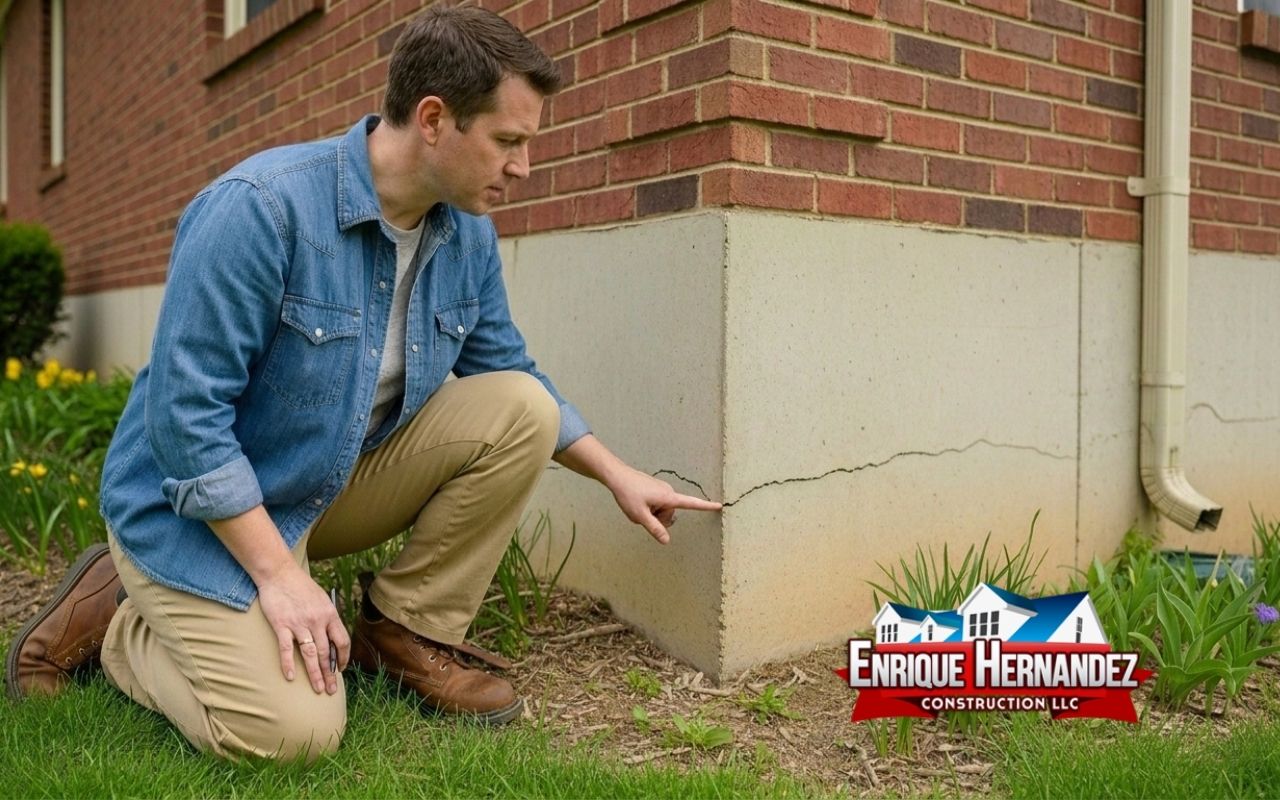
Not every crack means major trouble, but pattern, size, and location matter. When you inspect foundation cracks, take your time and look at both exterior and interior surfaces. A careful check can show whether the change is old, stable, or getting worse.
- Measure crack width and note whether it is vertical, horizontal, or stair-step.
- Look for spalling, flaking, or small pits in the concrete surface.
- Check if cracks are wider near corners, windows, or basement walls.
- Mark the ends of visible cracks so you can track future growth.
Hairline cracks may be minor, but wider or horizontal cracks need closer review. Add each finding to your foundation inspection checklist for spring so you can compare changes over time with confidence.
Can Moisture Around Your Home Cause Foundation Trouble?
Yes, and it is one of the most common issues homeowners face in spring. Moisture near foundation walls can weaken soil, raise pressure against concrete, and create the right conditions for mold, musty smells, and water entry.
Check basements, crawl spaces, and exterior walls after rain. Damp patches, white powdery residue, and lingering odors often mean water is moving where it should not. When these signs appear together, your foundation inspection checklist for spring becomes even more important.
Drainage and Soil Conditions to Review
Good drainage helps your foundation stay stable through wet and dry periods. Water should move away from the home, not collect near the base. Soil condition matters too, because expansion and shrinkage can place stress on the structure.
- Make sure downspouts send water several feet away from the foundation.
- Check that the ground slopes away from the house, not toward it.
- Watch for pooling water after rain or slow drainage near corners.
- Avoid placing thirsty trees or large shrubs too close to the home.
Enrique Hernandez Construction LLC often reminds homeowners that steady maintenance works better than last-minute repairs. Our foundation maintenance tips can help you build a routine that supports long-term stability.
Frequently Asked Questions
How often should I do a spring home foundation check?
Once each spring is a smart habit. You may also want another quick review after long rainy periods or after a harsh winter.
What crack size should worry me most?
Hairline cracks are often less serious, but wider cracks, horizontal cracks, and stair-step cracks deserve closer attention. Changes that keep growing should be reviewed by a professional.
What does white residue on the foundation mean?
It is often efflorescence, which appears when water moves through concrete and leaves mineral deposits behind. It can be a sign that moisture is reaching areas that should stay dry.
When should I call a professional?
If you notice sticking doors, repeated water intrusion, large cracks, or uneven settling, it is time to reach out. Enrique Hernandez Construction LLC can help you review the condition and decide on the right next step.
Why should I keep notes and photos during inspections?
Records make it easier to see whether a problem is staying the same or getting worse. That information can also help when planning repairs or speaking with a contractor.
Plan Repairs and Next Steps With Confidence
A thorough foundation inspection checklist for spring gives you a clearer picture of your home’s condition. When you check drainage, concrete, soil, and moisture early, you lower the chance of bigger repairs later and protect your home through the season ahead.
Enrique Hernandez Construction LLC is here to help you move from concern to action with clear guidance and dependable work. To talk with our team about your findings or schedule help, visit our contact page. With Enrique Hernandez Construction LLC by your side, it is easier to protect your home with confidence.