



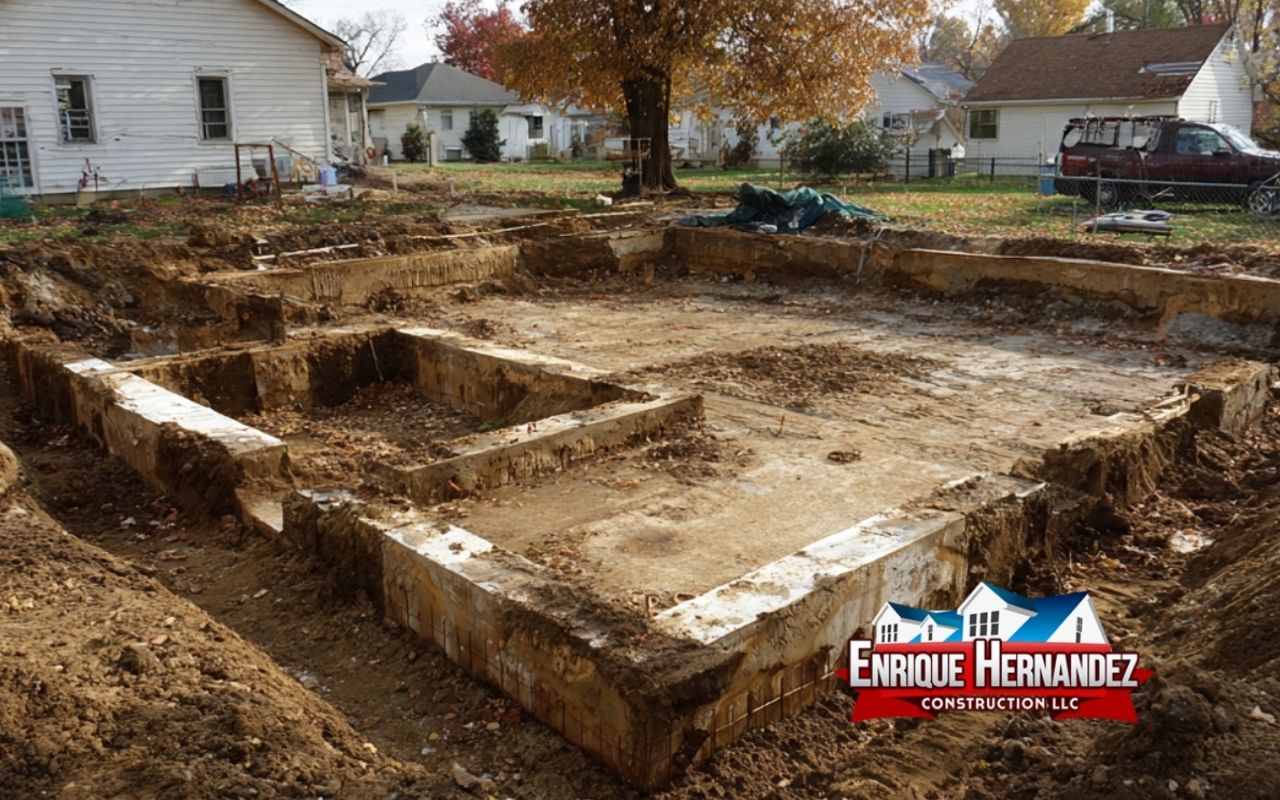
Foundation installation in Indianapolis is like setting the base for your future home. It needs careful steps and steady planning. At first, footing depth and permit rules may feel confusing. However, once you learn the basics, the work feels more manageable.
Many Indianapolis homeowners compare slab vs. crawl space early. Therefore, knowing the pros and cons matters. In addition, you should plan for foundation cost factors and use an inspector checklist. With guidance from Enrique Hernandez Construction LLC, you can move forward with confidence.
Why early planning makes the job easier
Planning early helps Enrique Hernandez Construction LLC keep your timeline clear and your budget steady. First, a plan lists key steps, needed materials, and required checks. As a result, everyone stays aligned, including builders and inspectors. Also, it reduces last-minute surprises that can delay work.
- Set a realistic schedule and inspection dates.
- Confirm the site layout and material needs early.
- Track approvals so the work keeps moving.
Soil varies across Indianapolis, so planning should include a site review. For example, moisture and firmness can affect footing depth. Moreover, early planning can uncover drainage problems before they grow. If you want local support, explore concrete services in Indianapolis for related options.
Choosing the right base: slab or crawl space
When you compare slab vs. crawl space, you balance cost, ground conditions, and comfort. A slab is a thick concrete layer poured on the ground. Because it uses less digging, it often costs less and needs less upkeep. Also, it can work well when deep freezing is not a major issue.
A crawl space raises the home a few feet. Therefore, it can offer easier access to plumbing and wiring. In addition, airflow below the home may help with comfort. Still, it can cost more because it needs more digging and more materials. In Indianapolis, soil and seasonal moisture can shape the best choice. If you want long-term care guidance, review concrete foundations maintenance before deciding.
What changes the price of a new foundation
Foundation cost factors often start with size and digging depth. Larger homes need more concrete and more labor. Likewise, deeper footing depth requires more material. Soil type matters too. If soil is loose, crews may add gravel or steel bars to improve strength.
- Home size and layout complexity.
- Soil strength, moisture, and drainage needs.
- Concrete grade, steel bars, and added water protection.
Local labor rates in Indianapolis also shape the total. Additionally, some sites need water removal or extra water barriers. To stay calm, many homeowners include a small buffer for surprises. When you plan foundation installation in Indianapolis, a clear scope helps control cost swings.
Permit steps and local rules in Indianapolis
Permit requirements Indianapolis can feel like a maze. However, they exist to protect safety and long-term strength. In most cases, you submit plans that show layout, footing depth, and materials. Then, the city reviews the paperwork before work begins.
Fees and review times vary by project size. After approval, inspections usually happen during digging, footing setup, and the concrete pour. If something fails, you fix it and schedule another visit. Therefore, staying organized matters. For help coordinating paperwork and site timing, contact Enrique Hernandez Construction LLC through the contact page.
Hiring a crew or doing it yourself
Choosing a crew or DIY depends on skill, time, and risk. Professionals bring tools, know-how, and code awareness. As a result, they often avoid costly mistakes. In addition, they understand local site conditions that affect foundation installation in Indianapolis.
DIY can lower labor costs for simpler tasks. For example, you might clear the site or help with basic setup. Still, footing errors can cause serious structure problems. Therefore, if you feel unsure, a pro review can protect your investment.
Soil checks and site prep basics
Soil testing helps confirm strength and moisture behavior before work starts. Even simple trial holes can show soil layers. More detailed tests can show how water drains. As a result, you can plan for proper support and avoid future shifting.
- Clear plants and debris, then level the area.
- Add compacted gravel to support drainage.
- Use a moisture sheet in crawl spaces when needed.
These early steps take time. However, they often prevent bigger problems later. When Enrique Hernandez Construction LLC plans a site, drainage and base prep are key parts of stable work.
Frequently Asked Questions
How long does foundation installation in Indianapolis usually take?
It depends on weather, permits, and site conditions. However, planning and fast inspections often shorten the timeline.
What footing depth is common for homes in Indianapolis?
Depth depends on soil and local code. Therefore, a site review and permit plan guide the final depth.
Do I always need permits before starting?
In most cases, yes. Because permit requirements Indianapolis cover safety rules, you should secure approval first.
Which is better: slab vs. crawl space for my home?
It depends on budget and moisture levels. Also, access to plumbing may make a crawl space more appealing.
What should be on an inspector checklist during the build?
Check trench size, steel bar placement, and curing time. In addition, confirm drainage and water barriers at the end.
Step-by-step inspection checks that prevent rework
An inspector checklist keeps the project moving and reduces delays. First, confirm the trenches match the plan. Next, verify steel bars are spaced correctly and tied in place. After the pour, allow enough curing time. Finally, confirm drainage paths and water barriers.
Because each phase builds on the last, small misses can cause big fixes later. Therefore, keep a printed list on site and mark items as they pass. This approach helps foundation installation in Indianapolis stay clean and predictable.
Handling surprises during the build
Even with a solid plan, surprises happen. For example, crews may hit rock or find a high water level. In that case, pause and review options with your builder or engineer. Rock may need special drilling. Water may need pumping or plan changes.
Weather can also slow work. Heavy rain can turn the site into mud and affect concrete timing. Therefore, adding schedule flexibility helps. With calm planning, foundation installation in Indianapolis can stay on track, even with setbacks.
Drainage steps that protect your foundation
Good drainage reduces water pressure on foundation walls. First, grade the yard so water flows away. Also, consider a gravel trench with a pipe to move water out. Gutters and downspouts matter too. Therefore, extend downspouts away from the home.
In wetter areas, a pump system can help keep spaces dry. When you prioritize drainage, you reduce cracking risk and long-term repairs. This is a smart final step in foundation installation in Indianapolis.
Build a base that lasts
Planning and preparation support a safe result. When you understand foundation cost factors, permits, and drainage, you reduce stress. Also, choosing slab vs. crawl space becomes easier with clear site details. With support from Enrique Hernandez Construction LLC, you can complete your project with a stable, long-lasting base.