



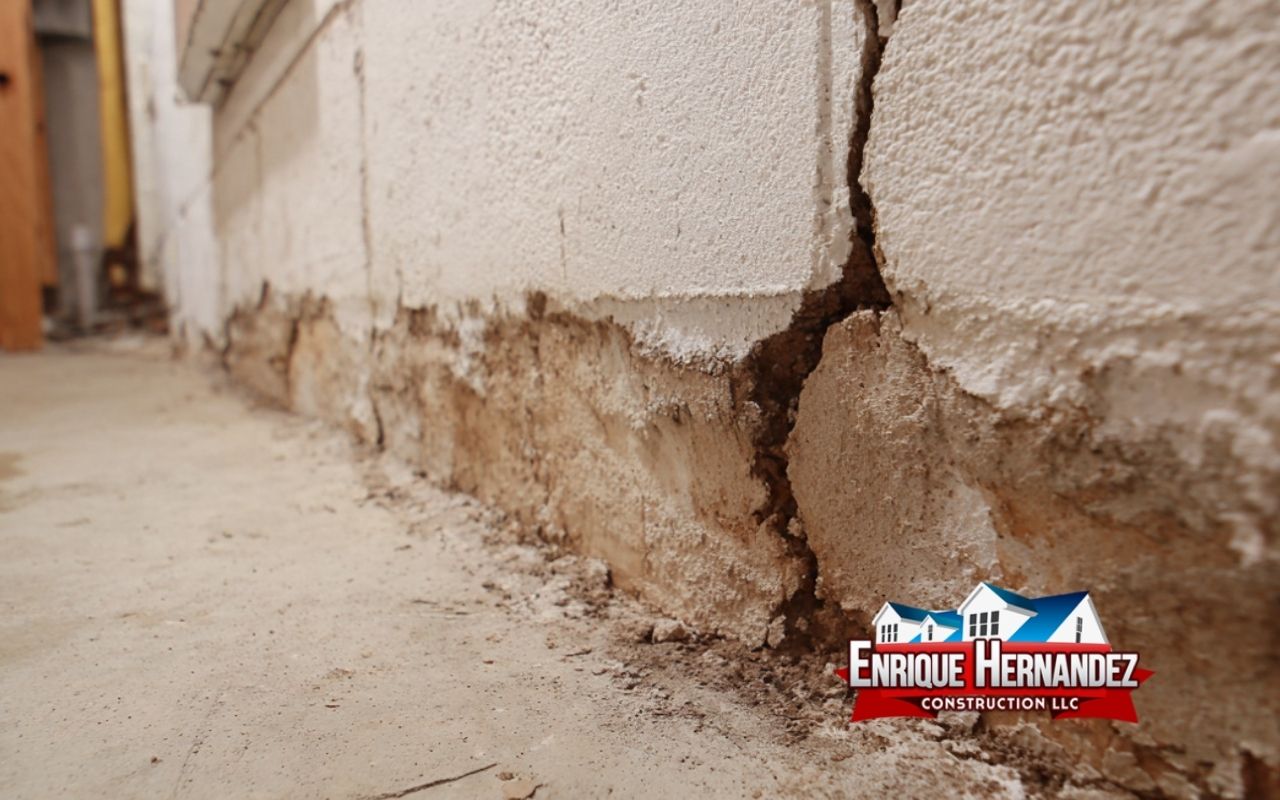
Frost heave foundation in Indiana can lift slabs, shift walls, and open cracks. Therefore, smart drainage and insulation matter. Enrique Hernandez Construction LLC helps homeowners lower risk with practical steps that fit Indiana winters.
As temperatures swing, the freeze-thaw cycle drives soil expansion under footings. In addition, early prevention often costs less than major repairs.
How Frost Heave Works Under Your Home
With Frost heave foundation in Indiana, wet soil freezes and expands. Then, thawing lets more water move in and freeze again. As a result, ice layers build pressure and push upward on footings, slabs, and walks. Over time, winter foundation damage may show up as cracks, uneven floors, or sticking doors.
Signs to Watch During Cold Months
Frost heave foundation in Indiana often starts with small changes. However, repeated soil expansion can make them worse after each freeze-thaw cycle.
- New wall or floor cracks that widen after thaws
- Doors or windows that stick or won’t latch
- Uneven floors or a slight slope in one area
- Gaps near trim, frames, or basement joints
Control Water With Grading and Gutter Drainage
For Frost heave foundation in Indiana, water control is the biggest win. Therefore, keep grading around foundation areas sloping away, and improve gutter drainage so runoff doesn’t soak the edge soil. Enrique Hernandez Construction LLC can also align prevention with your home’s layout.
- Fill low spots where meltwater pools near walls
- Extend downspouts 4–6 feet away from the base
- Clean gutters before the first hard freeze
For deeper planning, review foundation waterproofing tips and see how moisture paths affect winter foundation damage.
Insulate Crawl Spaces to Reduce Freeze Depth
Insulating crawl space walls can limit how far freezing temperatures reach. In addition, sealing vents reduces cold air flow that fuels soil expansion under the home. Enrique Hernandez Construction LLC often pairs insulation with drainage checks, because both steps work better together during long cold snaps.
Keep Up With Simple Maintenance All Year
Frost heave foundation in Indiana is easier to prevent than to correct. Meanwhile, seasonal checks help you catch small issues before they spread.
- Spring: note new cracks after the final thaw
- Summer: restore grading around foundation edges
- Fall: clean gutters and confirm downspouts discharge away
Use this guide on foundation maintenance in Indiana to keep a clear routine. Enrique Hernandez Construction LLC can help you prioritize fixes by risk.
Frequently Asked Questions
Is frost heave common in Indiana soils?
Yes. When soil holds moisture, the freeze-thaw cycle can form ice layers. Consequently, the ground may lift and shift areas near footings and slabs.
What makes winter foundation damage worse?
Poor gutter drainage and flat grading around foundation zones feed extra moisture. Then, freezing expands that wet soil, adding pressure during each cold swing.
Can I reduce risk without major construction?
Often, yes. Start with downspout extensions, clean gutters, and fixing low spots. In addition, sealing and insulating crawl spaces can reduce freezing depth.
When should I call a pro?
If cracks grow quickly, floors slope, or doors stop closing, get a structural opinion. Enrique Hernandez Construction LLC can help you decide what is urgent.
Where can I learn the warning signs in more detail?
Read signs of foundation problems at home so you can compare changes room by room and act earlier.
Plan Ahead Before the Next Deep Freeze
Frost heave foundation in Indiana can be managed with smart drainage, steady insulation, and consistent checks. Therefore, document changes after thaws and address moisture first. If you want a targeted plan for your property, schedule a winter-ready foundation inspection based on your soil and layout.