



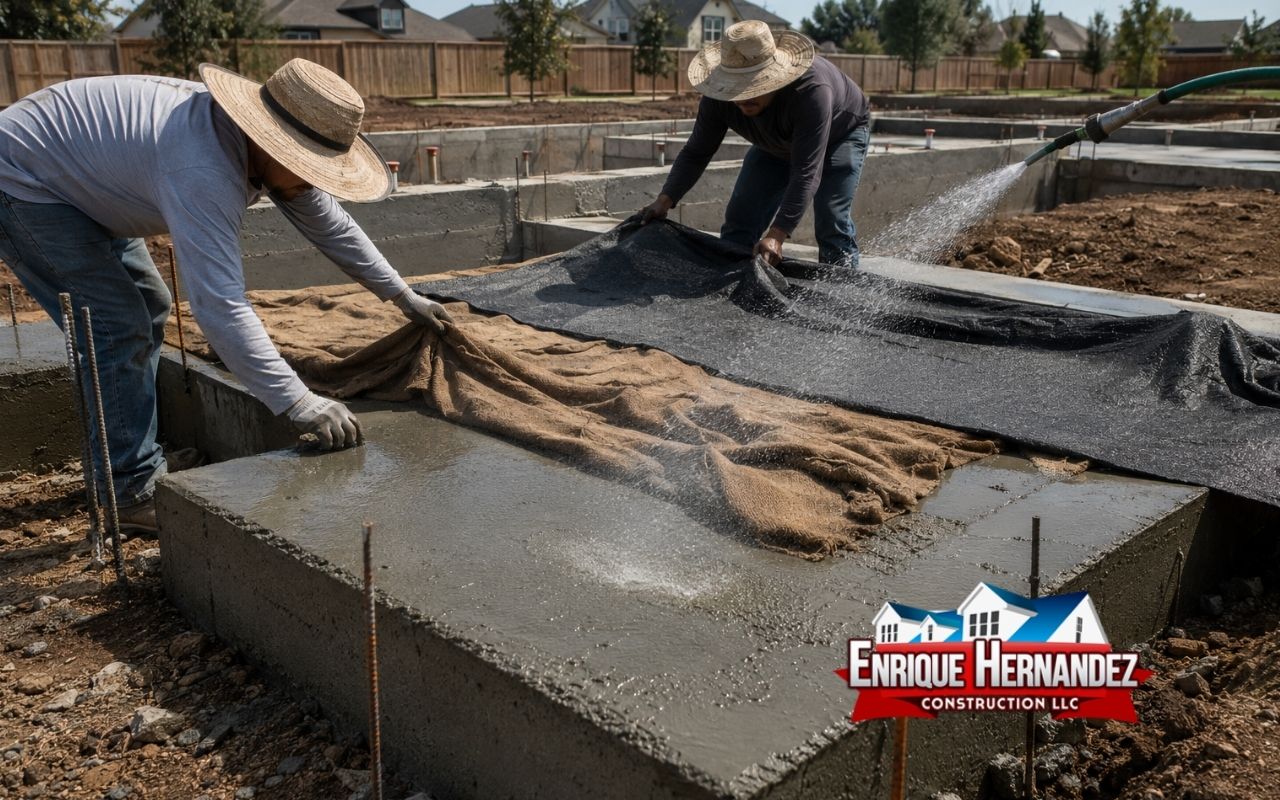
Summer heat can make foundation work more difficult. Hot weather concrete curing for foundations needs careful timing, steady moisture, and smart protection from sun and wind.
At Enrique Hernandez Construction LLC, we focus on practical steps that help fresh concrete cure with better strength and less early damage.
How Can Heat Damage Fresh Foundation Concrete?
High temperatures can pull water from fresh concrete too fast. When that happens, the surface may dry before the inside has enough time to cure. This can lead to small cracks, dusting, and weaker edges.
Hot weather concrete curing for foundations is important because concrete needs moisture to develop strength. When the mix loses water too soon, the foundation may not perform as planned over time.
Main Risks When Fresh Concrete Dries Too Fast
Protecting fresh concrete from heat starts with knowing what can go wrong. Summer conditions can change the way concrete sets, finishes, and cures.
- Fast moisture loss can cause plastic shrinkage cracks.
- Direct sun can raise surface temperatures quickly.
- Wind can dry exposed concrete even faster.
- Rapid setting can reduce time for proper finishing.
- Uneven curing can create weak spots in the foundation.
With Enrique Hernandez Construction LLC, you get a team that treats curing as part of the foundation process, not as a final detail.
Better Concrete Moisture Retention During Summer Work
Concrete moisture retention helps the mix cure at a steady pace. This can include light misting, damp coverings, plastic sheeting, or approved curing compounds. The right method depends on the weather, the pour size, and the site conditions.
For more support with long-term foundation care, our guide on materials used for foundation repairs explains how proper product choices can support better results.
Practical Steps for Concrete Curing in Summer
Concrete curing in summer works best when the crew plans before the pour begins. Waiting until the surface looks dry can be too late.
- Schedule pours during cooler parts of the day when possible.
- Keep tools, covers, and water ready before placement.
- Start curing after finishing is complete and bleed water is gone.
- Use shade when direct sun is strong.
- Check the surface often during the first curing period.
Our team at Enrique Hernandez Construction LLC keeps the process organized so fresh concrete receives protection when it needs it most.
Planning Ahead for Curing Concrete Footings
Curing concrete footings can be challenging because footings are often exposed to open air, sun, and wind. Moisture can leave the surface quickly, especially on dry summer days.
Good planning includes checking the forecast, preparing forms correctly, and protecting the concrete soon after placement. If your project also involves slab concerns, our slab foundation repair tips can help you understand common warning signs.
Tools That Help Crews Control Heat
Hot weather concrete curing for foundations may require more than one method. The goal is to reduce harsh temperature changes while keeping the surface from drying too fast.
- Sunshades can reduce direct heat on fresh concrete.
- Windbreaks can slow moisture loss from moving air.
- Damp burlap can keep the surface moist.
- Plastic sheeting can help trap moisture near the surface.
- Temperature checks can guide curing adjustments.
When you choose Enrique Hernandez Construction LLC, we use clear site practices that support stronger curing and better foundation performance.
Frequently Asked Questions
Why is hot weather concrete curing for foundations so important?
It matters because heat can dry fresh concrete before it has enough time to gain strength. Better curing helps reduce cracks, weak surfaces, and early wear. For related care tips, review our foundation maintenance guide.
What is the best way to protect fresh concrete from heat?
The best method depends on the site, but shade, wind control, damp covers, and steady moisture are common options. The main goal is to slow water loss without damaging the fresh surface.
How long should concrete stay moist in summer?
Many concrete projects need several days of curing support, but the exact time depends on the mix, weather, and project needs. For repair-related material guidance, visit our foundation repair materials resource.
Can hot weather affect concrete footings?
Yes. Footings can dry quickly when exposed to sun and wind. Careful curing concrete footings helps protect strength, shape, and long-term support for the structure above.
What should I do if I notice cracks after curing?
Small cracks can have different causes, so it is best to have the area checked before the problem grows. You can also read our slab foundation repair tips to understand possible next steps.
Build Stronger Foundations During Hot Conditions
Hot weather concrete curing for foundations takes planning, moisture control, and fast action after finishing. These steps help protect the base of the structure during one of its most important stages.
At Enrique Hernandez Construction LLC, our goal is to help you make informed choices for stronger foundation work. To discuss your project needs, visit our contact page and tell us what you are planning.