



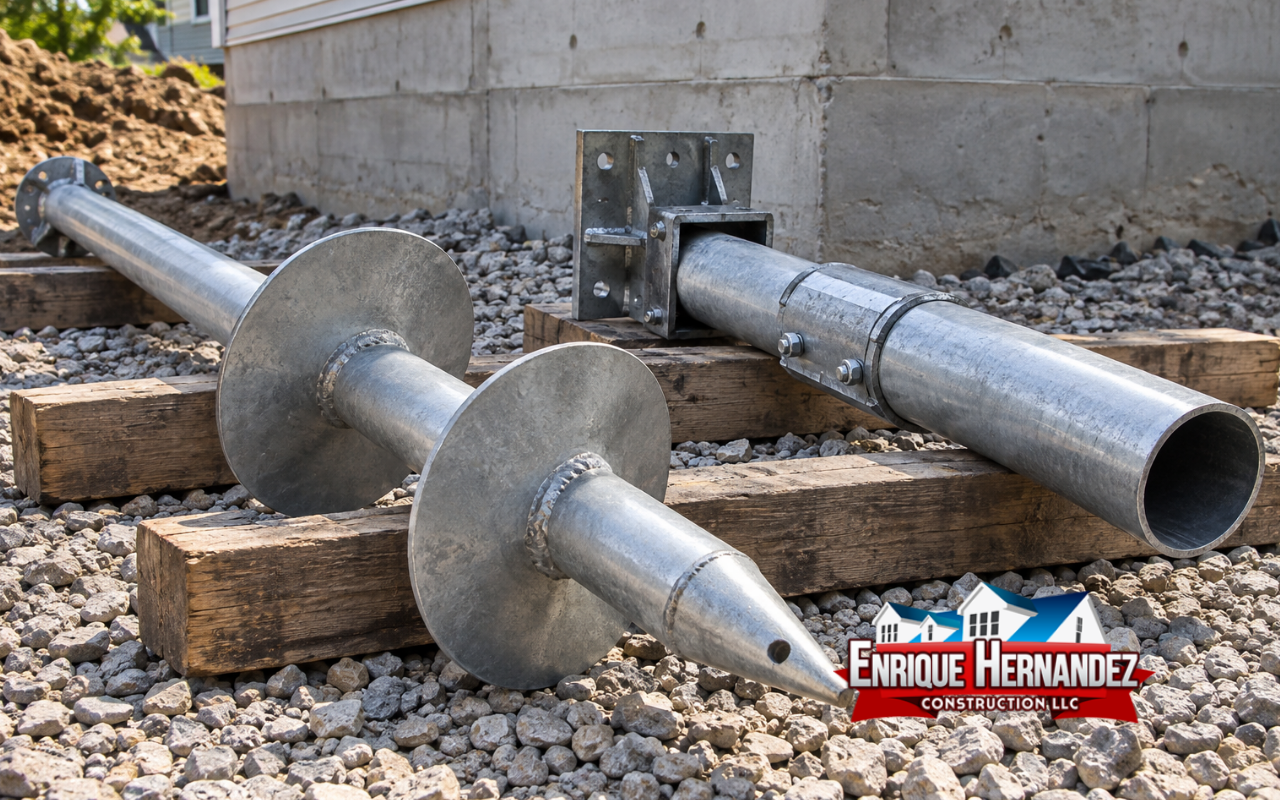
Helical piers vs push piers is a common comparison when a settling foundation needs underpinning. Both systems transfer structural loads to more stable soil, but they differ in installation, load requirements, and site conditions.
Request your underpinning estimate when settlement signs suggest deeper stabilization may be needed.
Understand What Foundation Underpinning Actually Does For Homes
Underpinning strengthens or stabilizes an existing foundation by transferring load to more reliable soil or deeper bearing material. The right system depends on structure weight, access, soil conditions, and the type of movement being corrected.
Foundation piers are not chosen by preference alone. The building and site conditions should guide the recommendation.
Compare How Helical And Push Piers Work Differently
Helical piers are screwed into the ground using steel shafts with helical plates. Push piers are hydraulically driven into the soil using the structure’s weight as resistance.
Our foundation repair materials guide explains how different structural repair materials serve different purposes.
Use This Pier Comparison Before Choosing A System
schedule your pier consultation when settlement, cracking, or sinking suggests underpinning may be necessary. Free estimates are available, giving homeowners a practical starting point before choosing between systems.
| Factor | Helical Piers | Push Piers |
|---|---|---|
| Installation | Screwed into soil | Hydraulically driven |
| Structure weight | Useful for varied loads | Uses structure as resistance |
| Verification | Torque relates to capacity | Installation pressure monitored |
Choose Helical Piers When Specific Site Conditions Fit
Helical systems can work well where lighter structures, additions, or limited structural weight make push-pier resistance less practical. They can also be useful where installation torque provides useful feedback during placement.
The exact design should still be based on engineering, soil, and structural requirements.
Choose Push Piers For Heavier Existing Structures Carefully
Push piers are often used under heavier existing foundations because the structure provides resistance during installation. They can be effective where deeper competent bearing layers are needed.
Our Monday through Friday hours, from 8 a.m. to 5 p.m., support planned consultations and repair scheduling during the workweek.
Watch For Signs You May Need Foundation Piers
- Doors or windows begin sticking.
- Cracks widen across walls or masonry.
- Floors become uneven.
- Foundation sections appear to settle.
- Previous cosmetic repairs reopen.
These signs do not confirm that piers are required, but they can indicate that a deeper structural evaluation is appropriate.
Consider Indiana Clay Soil Before Making Underpinning Decisions
Clay-rich soil can expand when wet and shrink during dry periods, which may contribute to foundation movement. Underpinning decisions should account for these seasonal soil changes.
Our Indiana clay soil foundations resource explains why soil conditions matter in local foundation performance.
Compare Installation Access Before Final Selection
Tight side yards, interior access, landscaping, and nearby utilities can affect which system is practical. Pier selection should account for the equipment path as well as the foundation itself.
Ask How Performance Will Be Verified
Installation records, torque, pressure, or engineering requirements may be part of the verification process. Homeowners should understand what information supports the final pier depth and capacity.
Use Existing Foundation Conditions To Guide Pier Selection
Consider Structure Weight Before Comparing Systems
Push piers rely on resistance from the existing structure during installation, while helical systems can be installed with rotational torque. That difference can matter for lighter additions, porches, or structures that do not provide the same reaction force as a heavier building.
Consider Access Around The Foundation Perimeter
Landscaping, patios, utility lines, narrow side yards, and interior basement conditions can affect how installation equipment reaches the footing. Access can influence both the practical installation method and the amount of restoration needed after the repair.
Ask How The Final Pier Design Is Documented
Homeowners should understand how pier depth, installation readings, bracket placement, and final stabilization are recorded. At Enrique Hernandez Construction LLC, we can help explain how the proposed underpinning scope connects to the visible settlement and the site conditions before work begins.
- Confirm the settlement pattern.
- Review structure weight and access.
- Compare installation requirements.
- Ask how capacity is verified.
- Review the final stabilization goal.
Review The Underpinning Scope Before Foundation Work Begins
A pier proposal should identify installation locations, expected access, excavation needs, bracket placement, and the stabilization goal. Homeowners should also ask whether interior cracks or exterior finishes are part of the repair or separate follow-up work.
Clear scope details make it easier to compare systems and understand what the project will actually change once the foundation is stabilized.
Foundation stabilization should also be coordinated with drainage and grading when water management contributes to soil movement around the structure.
Confirm Restoration Needs After Pier Installation
Homeowners should also confirm whether landscaping, concrete, or interior finishes need restoration after pier installation so the final scope is complete.
Frequently Asked Questions
How long do helical piers last?
Service life depends on system design, steel protection, soil conditions, installation quality, and the specific product used.
What is foundation underpinning?
Underpinning strengthens or stabilizes an existing foundation by transferring loads to deeper or more reliable bearing material.
Are push piers better than helical piers?
Not universally. Each system fits different structural loads, soil conditions, and access situations.
What signs suggest foundation piers may be needed?
Repeated cracking, settlement, uneven floors, sticking doors, and visible foundation movement can justify further evaluation.
Can piers lift a settled foundation?
Some systems may allow controlled lifting, but the amount and feasibility depend on the structure and site conditions.
Compare Helical Piers vs Push Piers With Confidence
The right choice between foundation pier comparison depends on soil, structure weight, access, and the type of settlement being corrected. Our team at Enrique Hernandez Construction LLC can help homeowners understand when underpinning may be appropriate. book your underpinning estimate when you want a clearer stabilization plan.