



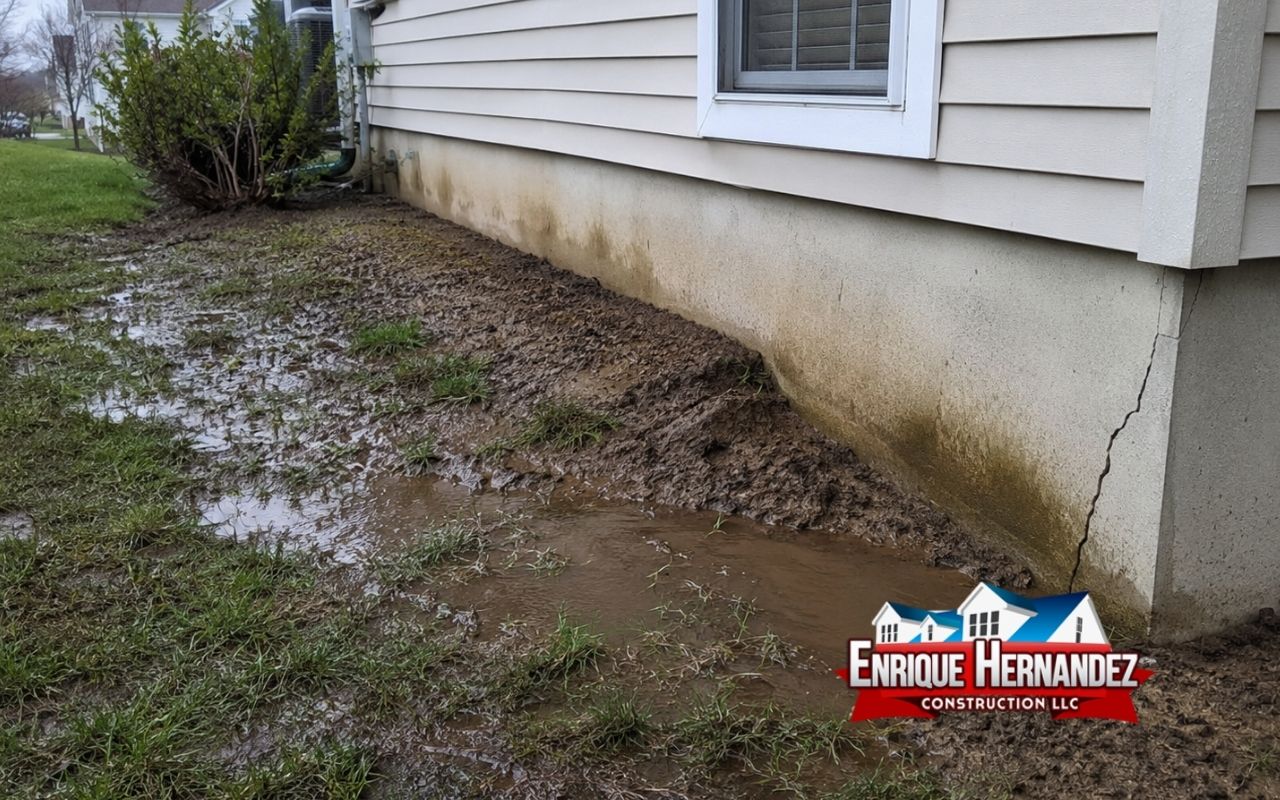
Preventing water damage starts with noticing how water moves around your home. Poor grading and foundation problems can lead to cracks, damp rooms, mold, and costly repairs when rainwater sits too close to the house.
At Enrique Hernandez Construction LLC, we help homeowners understand simple ways to keep their foundation dry and stable. With the right slope, clean drainage, and early action, your home can stay safer during heavy rain and changing weather.
Why Does Proper Yard Grading Protect Your Home?
Proper grading means the soil around your home slopes away from the foundation. This helps rainwater move toward safe drainage areas instead of staying near your walls. When the slope is wrong, moisture can slowly enter small cracks and weak spots.
Negative grading around house areas is a common cause of water trouble. It can make soil stay wet for too long and place pressure against the foundation. For more helpful prevention steps, visit our guide on how to prevent foundation issues.
Early Signs Your Yard Needs Better Drainage
Your yard often shows clear warning signs after rain. Looking at these areas early can help you stop poor grading and foundation problems before they grow into serious damage.
- Water pooling near foundation walls after storms
- Soft, muddy, or soggy grass that stays wet
- Soil washing away near walkways or flower beds
- Mulch or dirt collecting against exterior walls
- Damp smells, wall stains, or small cracks indoors
These signs may seem small at first. However, they often point to drainage problems around home areas that need attention. When water does not move away, it can weaken the soil and affect the base of your house.
How Poor Grading Can Damage Foundations
When water stays beside your home, it pushes against the foundation. Over time, this pressure may cause cracks, leaks, and uneven settling. At Enrique Hernandez Construction LLC, we often remind homeowners that small grading issues can become bigger structural concerns when they are ignored.
Moist soil can also lead to basement dampness, mold growth, and pest activity. As the ground expands and shrinks, doors may stick, windows may shift, and interior walls may show thin cracks. Learning about foundation waterproofing tips can help you reduce these risks.
Simple Steps for Correcting Yard Slope
Correcting yard slope usually means shaping the soil so water flows away from your home. The goal is a gentle, steady drop from the foundation toward a safe drainage point.
- Check the yard after rain and mark where water gathers.
- Use a level or string line to find low spots near the house.
- Add clean soil to low areas beside the foundation.
- Shape the soil so it slopes away from the home.
- Pack the soil lightly and cover it with grass, mulch, or plants.
This process does not need to feel overwhelming. Still, the slope must be smooth and firm. Large dips, loose soil, or uneven mounds can send water back toward the home after the next storm.
Drainage Updates That Keep Water Moving
Good drainage starts with gutters and downspouts. Downspouts should send water several feet away from the foundation. Splash blocks or extensions can help guide runoff to a safer area of the yard.
French drains, dry wells, and shallow swales can also help when water stays in one place. These options move water away from the home and reduce drainage problems around home edges. They are especially useful when the yard has heavy soil or low areas.
At Enrique Hernandez Construction LLC, we recommend checking these systems often. Leaves, dirt, and broken pieces can block water flow. When drainage stays clear, your foundation has better protection during heavy rain.
When Professional Help Makes Sense
Some yard and foundation issues need more than a simple weekend fix. A professional can check the slope, soil, cracks, and water path to find the safest solution.
- Large cracks appear in foundation walls.
- Water keeps entering the basement or crawl space.
- The yard has deep erosion or sinking soil.
- Walls bow, floors slope, or doors stop closing well.
- Water returns even after basic grading work.
Our team at Enrique Hernandez Construction LLC can help homeowners decide whether grading, drainage improvements, or foundation support is needed. You can also review our foundation repair tips for home stability to better understand warning signs.
Frequently Asked Questions
What causes negative grading around a house?
Negative grading around house areas often happens when soil settles, landscaping changes, or fill dirt washes away. When the ground slopes toward the home, water moves closer to the foundation instead of away from it.
How serious is water pooling near the foundation?
Water pooling near foundation walls should be taken seriously. It can soften soil, create pressure, and increase the chance of leaks, cracks, and poor indoor moisture control.
Can poor grading be fixed without major work?
Many small grading issues can be improved by adding soil, shaping the slope, extending downspouts, and keeping drains clear. However, deep cracks or repeated flooding may need professional help.
How often should I check my yard drainage?
It is best to check drainage after heavy rain and at least twice a year. Spring and fall are good times to look for puddles, erosion, clogged gutters, and soil settlement.
Can poor grading and foundation problems lower home value?
Yes, poor grading and foundation problems can affect home value because buyers often worry about water damage, cracks, and future repair needs. When customers contact Enrique Hernandez Construction LLC, we explain the safest next step for protecting their home.
Keep Your Foundation Safer Year After Year
Long-term care makes a big difference. Keep gutters clean, make sure downspouts stay connected, and watch for new low spots in the soil. After storms, look for standing water and correct small issues before they spread.
Poor grading and foundation problems are easier to manage when you act early. For help protecting your home from drainage and slope issues, reach our team through our contact page.