



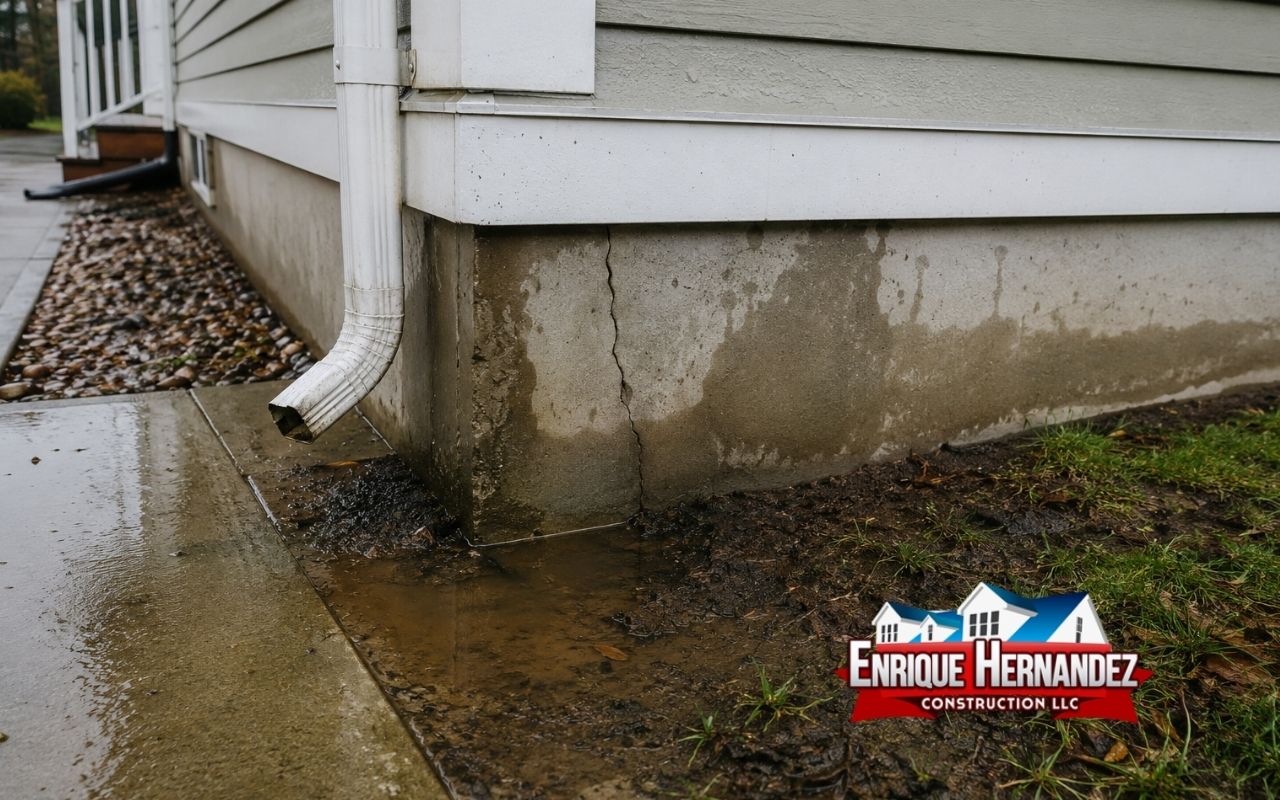
Heavy rain can do more than flood a yard. When water collects near your home, it can push against walls, enter small cracks, and weaken the soil that supports your foundation. At Enrique Hernandez Construction LLC, we know how important it is to spot risk early and protect your home before damage grows.
This guide explains heavy rain foundation damage in simple terms, so you can understand what to watch for after storms. You can also review our foundation waterproofing tips for more ways to reduce water problems around your home.
How Heavy Rain Puts Pressure on Foundations
Heavy rain fills the soil around your home with moisture. When the ground cannot drain fast enough, it expands and presses against foundation walls. This pressure may create small cracks, widen old gaps, or allow water to move into weak areas.
Over time, heavy rain foundation damage can affect more than the basement. Floors may shift, walls may show new cracks, and doors may stop closing well. These problems often begin slowly, so a careful check after storms can make a real difference.
Why Does Soil Saturation Lead to Leaks?
Water-soaked soil around home foundations can stay heavy for days after a storm. Clay soil often holds water longer, while loose or sandy soil may wash away in certain areas. Both conditions can change how your foundation is supported.
Stormwater near foundation walls looks harmless at first, but it often finds the easiest path inside. Cracks, joints, floor edges, and old seals can become entry points. With Enrique Hernandez Construction LLC, you can better understand where water may be entering and what steps may help reduce future seepage.
Warning Signs After Strong Storms
Foundation problems are easier to manage when you notice them early. After strong rain, walk around the inside and outside of your home. Look for small changes that were not there before the storm.
- New cracks in basement walls, floors, or exterior concrete
- Damp spots, musty smells, or foundation leaks after rain
- Doors or windows that stick after wet weather
- Gaps where walls meet ceilings, floors, or trim
- Standing water close to the foundation after rainfall
Some signs may seem minor, but they can point to deeper movement or water entry. Our guide on signs of foundation problems in a home can help you compare what you see with common warning signs.
Better Drainage After Heavy Storms
Good drainage after heavy storms helps move water away before it settles near your foundation. The goal is simple: keep rainwater from collecting beside the house, especially near basement walls or crawlspace areas.
- Clean gutters so water can flow without spilling over
- Extend downspouts several feet away from the home
- Check that soil slopes away from foundation walls
- Fill low spots where puddles form near the house
- Keep yard drains clear of leaves, mud, and debris
At Enrique Hernandez Construction LLC, we often remind homeowners that drainage is one of the first defenses against heavy rain foundation damage. Even simple changes can lower pressure around the home and help reduce water entry.
Waterproofing Steps That Reduce Water Entry
Waterproofing can help limit how much moisture reaches the inside of your home. Exterior sealants, membranes, and proper drainage systems may help block water before it touches vulnerable areas. Interior coatings and sealants may also help manage small seepage points.
Waterproofing works best when it is paired with clean gutters, proper grading, and fast attention to cracks. A single product rarely solves every moisture issue. A full plan should address where the water comes from, how it moves, and where it enters.
Simple Habits That Protect Your Foundation
Regular maintenance helps reduce risk before heavy storms arrive. These habits are simple, but they can prevent water from sitting against your home for long periods.
- Inspect the foundation before and after rainy seasons
- Seal small visible cracks before they widen
- Remove leaves and debris from gutters often
- Watch for soft soil or sinking areas near the home
- Review repair needs with a trusted professional when signs grow
When repairs are needed, it is helpful to understand your options before problems spread. You can read our foundation repair tips for home stability to learn how repair planning supports long-term safety.
Frequently Asked Questions
Can heavy rain really damage a foundation?
Yes. Heavy rain foundation damage can happen when saturated soil expands, shifts, or lets water press against weak areas. For prevention ideas, review our foundation waterproofing tips.
Why do I see foundation leaks after rain?
Leaks after rain often happen because water builds up outside the wall and enters through cracks, joints, or weak seals. Poor grading, clogged gutters, and short downspouts can make the problem worse.
What should I check after a heavy storm?
Look for damp walls, new cracks, musty smells, sticking doors, and water pooling near the foundation. You can compare these concerns with our guide to signs of foundation problems.
How can I reduce stormwater near foundation walls?
Keep gutters clear, extend downspouts, fix low spots, and make sure the yard slopes away from your home. These steps help move water before it can sit beside the foundation.
When should I ask for a foundation inspection?
Ask for an inspection when cracks grow, leaks return, floors feel uneven, or doors and windows shift. Our foundation repair tips explain why early action can support home stability.
Keep Your Home Safer Through Every Storm
Protecting your home starts with clear attention to water. Watch how rain moves across your roof, yard, and soil. When you choose Enrique Hernandez Construction LLC, we focus on practical steps that help you understand the issue and plan the right next move.
Heavy rain foundation damage can become serious when water problems are ignored. Clean drainage, early repairs, and steady maintenance can help protect your home through wet weather. To discuss foundation concerns after recent storms, contact our team about your foundation concerns.