



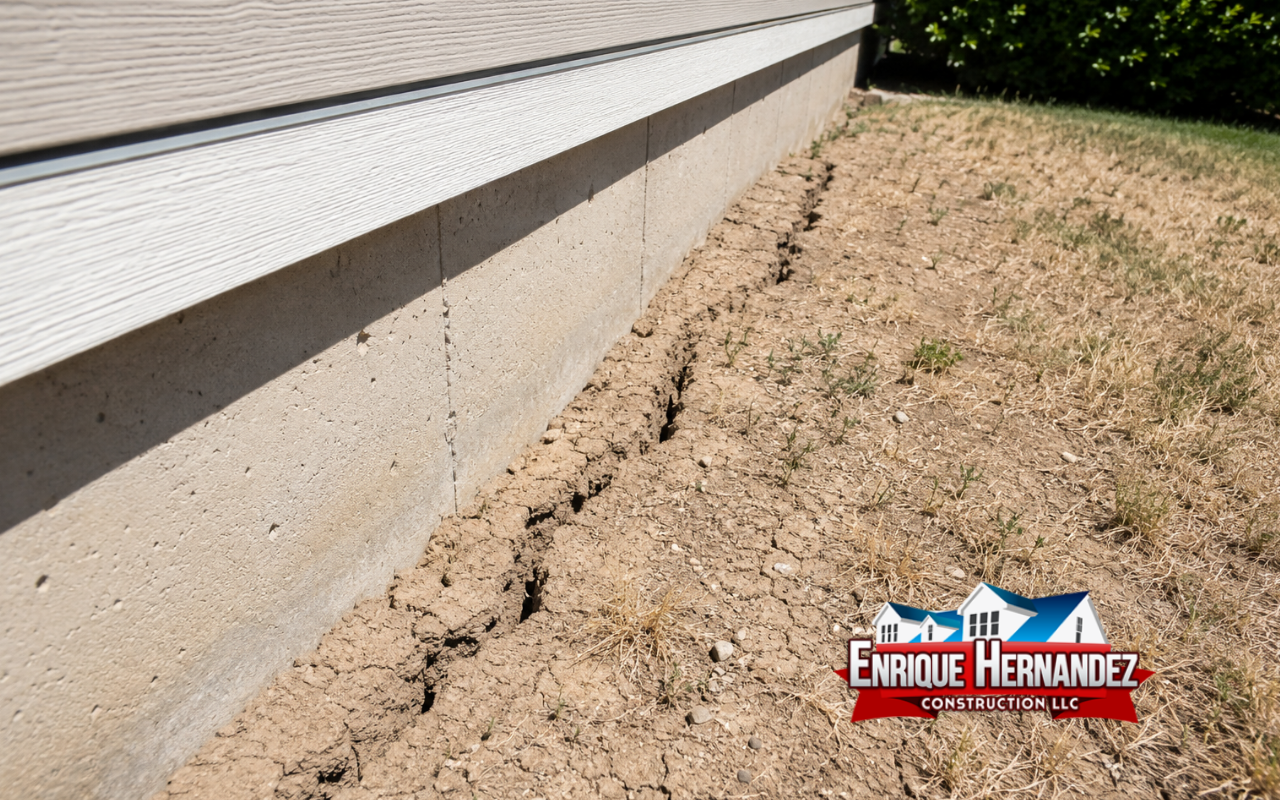
At Enrique Hernandez Construction LLC, we understand how dry weather can affect the soil under your home. Drought foundation problems often begin when soil moisture drops, the ground shrinks, and the foundation loses even support.
Early action can help protect the slab, footing, walls, and floors. Our guide to common foundation issues and solutions explains more signs homeowners should watch for.
Understanding drought foundation problems at home
Drought foundation problems start below the surface. When the ground becomes too dry, soil particles pull closer together. This creates soil shrinkage around foundation areas and can leave gaps near the foundation edge.
These gaps can reduce support under parts of the home. As the concrete slab, footing, or foundation wall reacts to uneven soil pressure, cracks and settling may appear. The sooner you understand the cause, the easier it is to plan the right response.
How does dry soil move foundations?
Dry soil foundation movement happens when the soil loses moisture and changes shape. Some soil types shrink more than others, especially clay-rich soil. When this happens, the base of the home may settle in uneven ways.
Drought and house settling are often connected because the home depends on steady ground support. With Enrique Hernandez Construction LLC, you can focus on practical warning signs, soil moisture care, and repair steps that match what is happening around your foundation.
Warning signs during long dry seasons
Many warning signs begin small, but they can show that the soil is moving. Walk around the inside and outside of your home during dry weather. Look for changes in walls, floors, doors, windows, and concrete surfaces.
- New drywall cracks near doors, windows, ceilings, or corners
- Foundation cracks from dry weather in concrete or masonry
- Doors and windows that stick, drag, or stop latching well
- Uneven floors, gaps near trim, or wall separation
- Visible gaps between dry soil and the foundation edge
These signs do not always mean severe damage. Still, they should be checked and tracked. Photos and notes can help you see whether cracks are growing during the dry season.
Soil moisture and drainage habits that help
Keeping soil moisture more balanced can help reduce foundation stress. The goal is not to flood the ground. The goal is slow, even moisture that limits sudden shrinking and swelling around the foundation.
- Use a soaker hose or drip line during long dry periods
- Water evenly around the foundation instead of soaking one spot
- Keep gutters clean so roof water flows away correctly
- Extend downspouts away from the foundation wall
- Check yard grading so water does not pool near the home
Good drainage helps prevent extreme wet and dry cycles. Our team at Enrique Hernandez Construction LLC can help homeowners think through foundation concerns, and our concrete foundation maintenance tips share simple ways to care for the base of a home.
Landscaping choices that support stable soil
Landscaping can change how moisture moves through the soil. Large trees, deep roots, and thirsty plants may pull water from the ground near the foundation. During a drought, this can make dry soil foundation movement worse.
Choose plants that fit the local climate and need less water. Keep large trees a safe distance from the home when possible. Mulch near garden beds can slow evaporation and support better moisture balance around the foundation.
Foundation cracks and settling warning timeline
Foundation cracks from dry weather should be watched closely. Some cracks stay small, while others widen as soil movement continues. A simple timeline can help you decide when to take the next step.
- Check cracks after long dry periods and after heavy rain
- Measure crack width and take clear photos
- Watch for diagonal cracks near doors and windows
- Notice whether floors feel more uneven over time
- Ask for help if cracks spread, widen, or return after repair
When you choose Enrique Hernandez Construction LLC, we focus on clear information before repair decisions. You can also review our cracked foundation repair information to understand when cracks may need closer attention.
Frequently Asked Questions
Can drought really damage a home foundation?
Yes. Drought foundation problems can start when dry soil shrinks and stops supporting the foundation evenly. This can lead to cracks, settling, sticking doors, and changes in floors or walls.
How can I tell if dry soil is affecting my home?
Look for cracks, uneven floors, sticking doors, and gaps between the soil and foundation. Our page on common foundation warning signs can help you compare what you see at home.
Should I water the soil around my foundation?
Careful watering can help during dry periods. Use slow, even watering instead of soaking one area. For more care steps, visit our concrete foundation care guide.
When should foundation cracks be checked?
Cracks should be checked when they widen, spread, or appear with uneven floors and sticking doors. You can review cracked foundation repair guidance to understand what may need closer attention.
Can small cracks from dry weather be ignored?
Small cracks should still be watched. Some remain minor, but others grow as soil shrinkage around foundation areas continues. Regular checks help you respond before the damage becomes harder to manage.
Plan the right next step for your foundation
Drought and house settling can feel overwhelming, but steady care makes a difference. Moisture control, drainage, landscaping, crack tracking, and routine checks all help protect the foundation from dry weather stress.
With Enrique Hernandez Construction LLC, you can take the next step when cracks, settling, or soil movement concerns appear. To discuss your foundation concerns, visit our foundation contact page.