



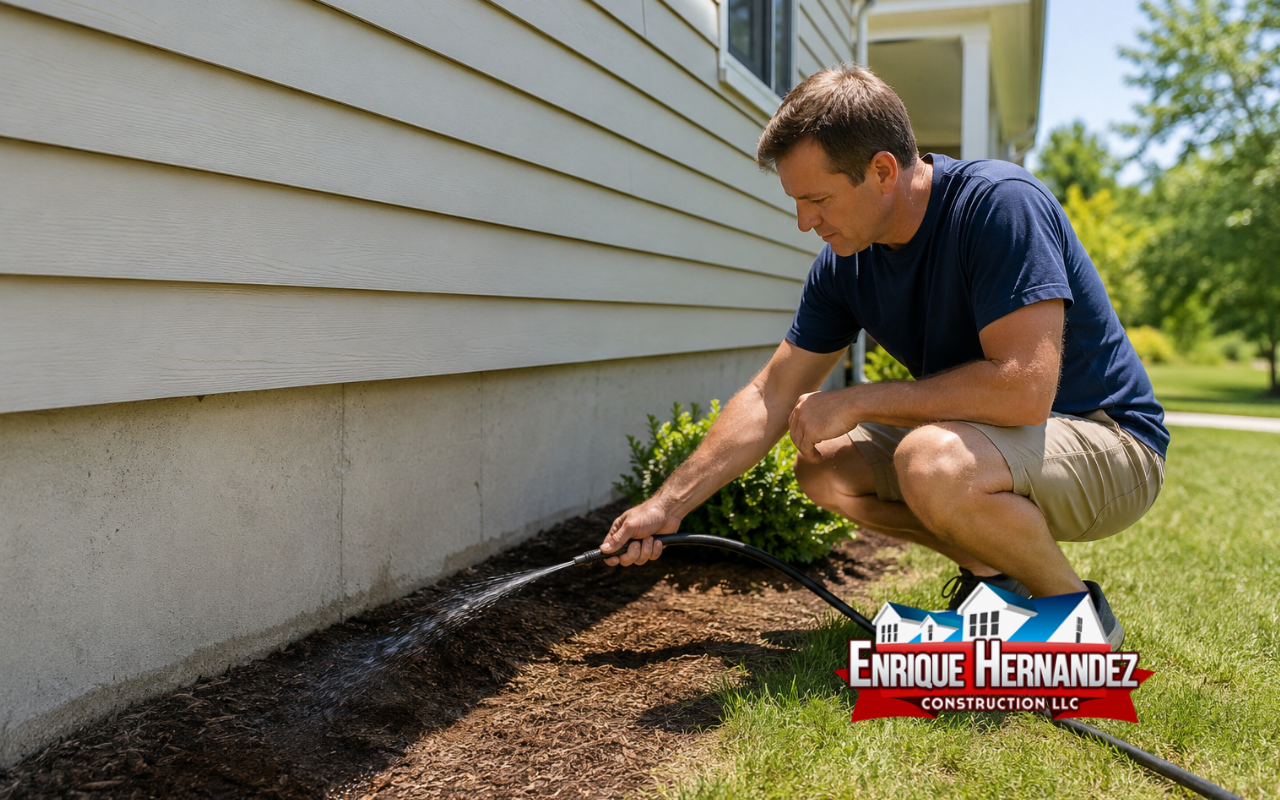
Watering around foundation areas may seem like a small task, but it can help protect your home from soil movement, cracks, and uneven settling. At Enrique Hernandez Construction LLC, we know that steady soil moisture is part of smart foundation issue prevention.
Dry summer weather can pull moisture from the soil near your home. When that soil shrinks, it may stop supporting the foundation evenly. A simple watering routine can reduce foundation stress and support long-term stability.
Why steady soil moisture protects your foundation
Soil expands when it gets wet and shrinks when it dries. This soil movement can place uneven pressure on concrete footings, foundation walls, and nearby slabs. Consistent moisture helps reduce sharp changes in soil volume and supports a more stable base.
Preventing soil shrinkage is especially important during long dry periods. When the ground pulls away from the concrete, water can later collect in those gaps. This wet-and-dry cycle can increase pressure and may lead to visible foundation damage over time.
How much to water foundation areas?
Many homeowners ask how much to water foundation areas during dry weather. A common goal is to keep the soil damp several inches below the surface without making it soggy. The right amount depends on soil type, rainfall, drainage, shade, and heat.
Clay soil may hold water longer, while sandy soil may dry faster. Start with slow watering and check the soil before adding more. Water should soak in gently instead of running across the yard or pooling near the home.
Summer foundation care tips for dry weather
Foundation watering in summer matters because heat can dry the soil quickly. A steady routine is better than waiting until the ground cracks, pulls away from the house, or leaves the foundation without even support.
- Water early in the morning or later in the evening to reduce evaporation.
- Use slow watering methods so moisture reaches deeper soil layers.
- Check soil moisture often during hot, dry weeks.
- Keep water from pooling directly against the foundation wall.
- Adjust your schedule after rainfall so the soil does not become too wet.
For more seasonal guidance, see our foundation maintenance tips for Indiana homes.
Simple irrigation methods for even moisture
Slow and even watering around foundation areas works better than heavy watering in one spot. The goal is to create balanced moisture around the home, not to flood the soil or create runoff near the foundation.
- Place a soaker hose near the foundation perimeter, but not tight against the wall.
- Use drip irrigation to spread water slowly and evenly.
- Let water soak in so runoff does not waste moisture.
- Use a timer to keep watering consistent during dry weeks.
- Use a rain gauge to avoid watering when rainfall has already helped.
With Enrique Hernandez Construction LLC, you get practical guidance that connects foundation care with real home conditions, including soil type, drainage patterns, grading, and seasonal moisture changes.
Warning signs of poor foundation moisture
Uneven moisture can show up in small ways before it becomes a larger concern. Watch for wall cracks, slab cracks, gaps near trim, sticking doors, or windows that no longer close smoothly. These signs may point to soil movement below the home.
Water pooling near the foundation after rain or irrigation is also a warning sign. It can lead to soil swelling, then more shrinkage when the ground dries again. Our team at Enrique Hernandez Construction LLC can review visible concerns and explain next steps clearly.
DIY checks that support foundation care
Regular checks help you notice moisture problems before they grow. These simple steps can support your routine and make summer foundation care tips easier to apply around your home.
- Walk around your home and look for soil gaps near the foundation.
- Check exterior and interior walls for new or widening cracks.
- Look for water pooling near downspouts, low spots, or poor grading.
- Test soil moisture with a soil probe, moisture meter, or long screwdriver.
- Keep notes after dry weeks, heavy rain, or watering changes.
You can also review our concrete foundation maintenance guidance for more ways to care for your home’s base.
Frequently Asked Questions
How often should I water around my foundation in summer?
During hot and dry weather, many homes need watering two or three times per week. Soil type and rainfall matter, so check moisture before watering again. For more prevention guidance, visit our page on how to prevent foundation issues.
Can too much water damage my foundation?
Yes, too much water can cause soil swelling and pressure near the foundation. The goal is steady moisture, not saturated soil. At Enrique Hernandez Construction LLC, we recommend watching for pooling, runoff, and soft soil near the home.
What is the best way to water near a foundation?
A soaker hose or drip line is often a good choice because it spreads water slowly and evenly. Keep the water source near the foundation area, but not pressed against the wall. You can compare this with broader foundation maintenance in Indiana advice.
Why does soil shrink around my home?
Soil shrinks when it loses moisture, especially during long dry periods. This can leave gaps beside the foundation and reduce support. Preventing soil shrinkage means keeping moisture more consistent through careful watering, drainage control, and routine checks.
When should I ask for professional help?
Ask for help when cracks widen, floors slope, doors stick often, or water keeps pooling near the home. When you choose Enrique Hernandez Construction LLC, we can help you understand visible foundation concerns and connect them with proper concrete foundations maintenance.
Keep your foundation stable through better watering
Watering around foundation areas is a simple habit that can support long-term home stability. When you combine steady moisture, proper drainage, clean gutters, downspout control, and regular checks, you reduce the risk of soil movement during dry seasons.
For help with foundation concerns or maintenance guidance, contact Enrique Hernandez Construction LLC. We can help you take practical steps that fit your home, soil conditions, and seasonal needs.