



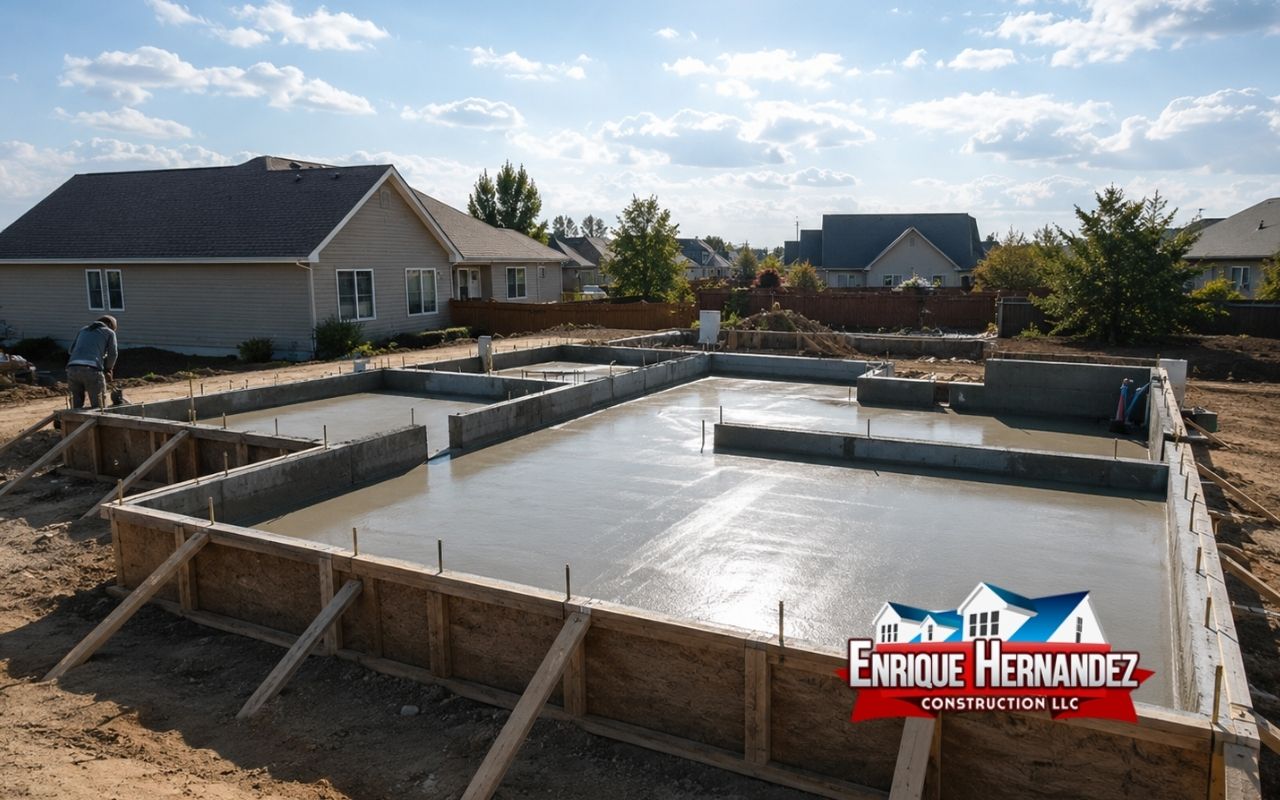
Selecting the best time to pour concrete foundation helps protect your project from cracks, weak spots, and costly delays. Weather, temperature, moisture, and timing all work together during the pour and curing stage.
At Enrique Hernandez Construction LLC, we plan each foundation with care so your concrete has the right conditions to harden well and support your structure for years.
Weather and Site Conditions That Shape Your Pour
Good planning starts with the forecast. Concrete foundation weather conditions can affect how the mix sets, how fast it loses water, and how strong it becomes after curing.
- Rain can weaken the surface if the concrete is not covered.
- Strong wind can dry the surface too fast.
- Cold weather can slow down curing and reduce early strength.
- High heat can cause quick drying and surface cracks.
Before we pour, we look at the site, soil, drainage, access, and weather window. This helps us choose the best time to pour concrete foundation without rushing an important step.
Ideal Temperatures for Strong Concrete Work
The ideal temperature for concrete work is usually mild, steady, and not too windy. A range near 50°F to 70°F often gives concrete a better chance to cure at a healthy pace.
When temperatures drop too low, the mix can harden slowly. When heat rises too much, water can leave the surface too quickly. At Enrique Hernandez Construction LLC, we use practical planning to help reduce these risks before and after the pour.
Why Does Timing Matter for Concrete Footings?
Knowing when to pour concrete footings can make a major difference in long-term strength. Footings carry the weight of the structure, so they need stable soil, good formwork, and proper curing conditions.
Footings should not be poured when the ground is frozen, overly wet, or unstable. It is also better to avoid heavy rain, extreme heat, and fast weather changes whenever possible.
For related repair guidance, you can read our tips on foundation repair materials before planning larger concrete work.
Moisture Control During the Curing Stage
Moisture control is one of the most important parts of foundation curing time. Concrete needs enough water to build strength, but the surface should not be flooded or washed out.
- Use light misting when the surface starts to dry.
- Cover fresh concrete with plastic sheeting or damp burlap.
- Protect the area from strong sun and wind.
- Watch for uneven drying, color changes, or small cracks.
These simple steps help the concrete cure more evenly. As a result, the foundation has a better chance to stay firm through daily use and seasonal changes.
Simple Curing Timelines for Better Planning
Concrete often gains a large part of its strength during the first week, but full design strength usually takes longer. A common planning window is about 28 days, depending on the mix and site conditions.
Foundation curing time can change with temperature, moisture, and the type of concrete used. Our team at Enrique Hernandez Construction LLC checks the conditions before recommending the next construction step.
Homeowners can also review our guide to foundation maintenance in Indiana to learn how care continues after the concrete has cured.
Practical Steps Before Pouring Footings
The best time to pour concrete foundation is easier to choose when the site is ready. Proper preparation helps reduce delays, weak areas, and drainage problems that may affect the finished foundation.
- Confirm the footing size, depth, and layout.
- Check that the soil is compact and stable.
- Prepare drainage before concrete is placed.
- Schedule the crew, inspection, and equipment early.
- Keep covers and curing materials ready on site.
Good preparation also supports a smoother pour. For slab-related care, visit our guide on slab foundation repair tips.
Frequently Asked Questions
What is the best time to pour concrete foundation?
The best time to pour concrete foundation is during mild, stable weather with no heavy rain, freezing temperatures, or extreme heat in the forecast.
Can concrete be poured in cold weather?
Concrete can be poured in cold weather with the right protection, but freezing conditions can slow curing and damage fresh concrete if the site is not prepared.
How long should a foundation cure before building?
The answer depends on the mix, weather, and project needs. Many foundations need several days before light work and longer before heavy loads are added.
What temperature is best for concrete work?
The ideal temperature for concrete work is usually mild and steady. Very hot or very cold conditions can affect moisture, strength, and finish quality.
How do we support better foundation planning?
When customers contact Enrique Hernandez Construction LLC, we review site needs, explain timing, and guide curing steps so the foundation has a stronger start.
Build a Strong Foundation With Better Timing
Choosing the right moment to pour is not only about convenience. It protects the strength, shape, and service life of your foundation from the first day.
When you need help planning around concrete foundation weather conditions, our team at Enrique Hernandez Construction LLC can guide the next step. Reach us through our contact page for foundation planning and let us help you prepare with confidence.