



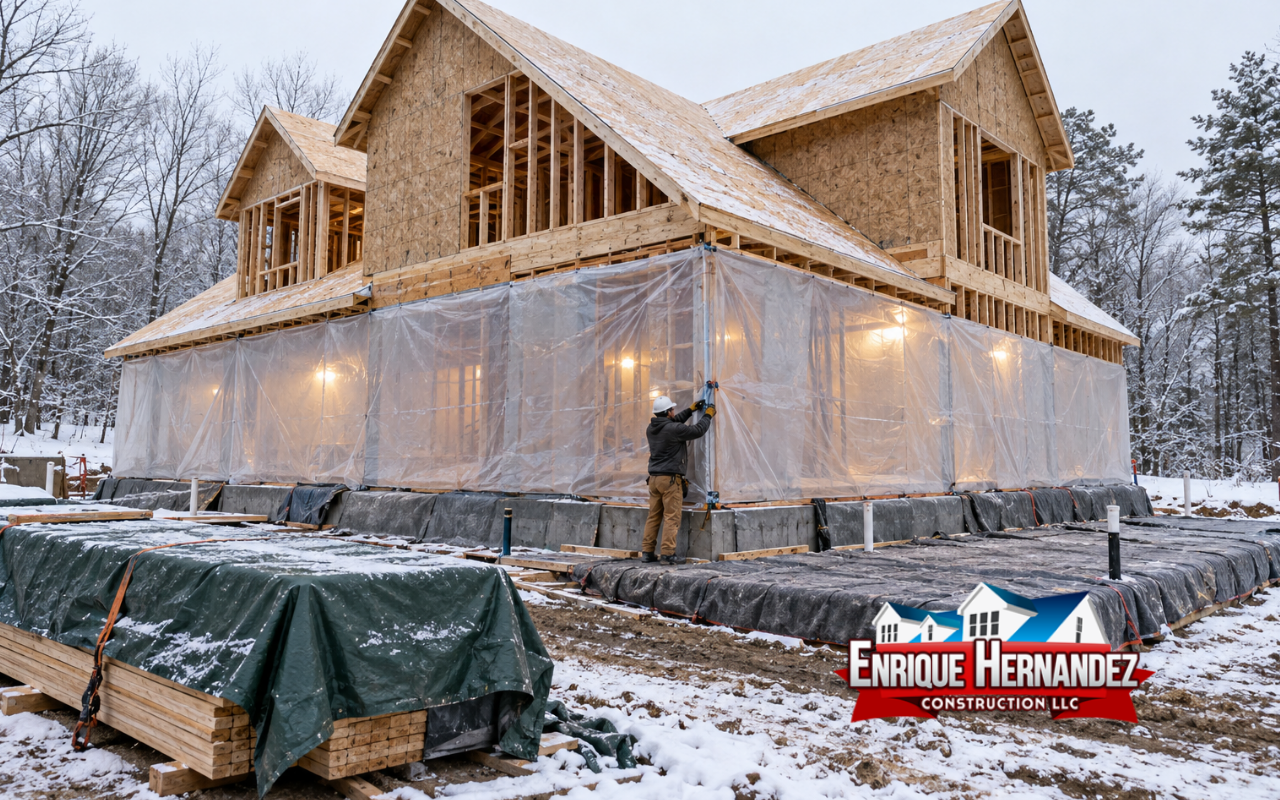
Building a house in winter is possible when concrete placement, weather protection, material storage, scheduling, and site access are planned around cold conditions.
Request your construction estimate when you are deciding whether to start or continue a project during colder months.
Start With The Parts Most Affected By Cold
Concrete, masonry, adhesives, sealants, and some exterior finishes are sensitive to temperature. Cold weather changes curing, drying, and handling requirements, so crews must follow manufacturer and industry guidance for each material.
Winter construction is not simply summer construction performed in colder air.
At Enrique Hernandez Construction LLC, we bring 14+ years of experience to residential construction planning.
Protect Fresh Concrete From Early Freezing Conditions Carefully
Fresh concrete can be damaged if it freezes before gaining enough strength. Mix design, placement temperature, heated enclosures, blankets, and curing protection may all be needed depending on conditions.
Our concrete foundation timing guide explains why temperature and curing conditions matter.
Use This Winter Construction Readiness Checklist Before Starting
schedule your construction consultation when winter timing, materials, and site protection need to be reviewed together. Free estimates are available, giving homeowners a practical way to compare seasonal feasibility before work begins.
- Confirm excavation access and drainage.
- Plan concrete cold-weather protection.
- Store materials away from snow and moisture.
- Protect framed openings from weather.
- Allow schedule flexibility for severe conditions.
Manage Building Materials Differently During Cold Weather Conditions
Lumber, insulation, drywall, roofing materials, and finish products should be stored according to their moisture and temperature needs. Repeated wetting or improper indoor storage can create problems later in the project.
Good winter planning includes delivery timing so materials are not left exposed longer than necessary.
Expect Winter Weather To Affect The Construction Schedule
Snow, frozen ground, high winds, and short daylight hours can slow some phases even when crews are prepared. Building a buffer into the timeline is more realistic than assuming every winter day will be productive.
Our business hours are Monday through Friday from 8 a.m. to 5 p.m., supporting planned scheduling and project coordination during the workweek.
Compare Winter Construction Advantages With Seasonal Tradeoffs Carefully
| Potential Advantage | Potential Tradeoff |
|---|---|
| Less seasonal demand | Weather delays |
| Early start before spring | Cold-weather protection costs |
| Progress during off-season | Shorter daylight hours |
The value of winter construction depends on how well the project team manages weather-sensitive phases.
Use A Builder Who Plans Around Winter Conditions
A winter project needs more coordination around sequencing, protection, temporary heat, deliveries, and site access. These details can prevent avoidable material and schedule problems.
Our new home construction services provide more information about full residential building support.
Use Enclosures To Protect Interior Work Areas
Temporary coverings and enclosed work zones can help protect unfinished interiors from wind, snow, and moisture. The approach should match the construction phase and avoid trapping excess moisture inside newly enclosed spaces.
Coordinate Deliveries Around Weather Windows
Large deliveries are easier when access roads, staging areas, and unloading zones are clear. Flexible delivery timing can reduce delays when snow or freezing conditions make equipment movement difficult.
Use Winter Sequencing To Protect The Build Schedule
Complete Weather Sensitive Exterior Work During Better Windows
Crews can use milder periods for concrete, roofing, exterior sealing, and other tasks that depend heavily on temperature or dry conditions. Interior framing, mechanical work, and other protected phases may continue when exterior work pauses, depending on the project stage.
Keep Site Access Open For Deliveries And Inspections
Snow, mud, and frozen ruts can interfere with material trucks, concrete deliveries, dumpsters, and inspection access. A winter site plan should include snow removal, temporary stone, drainage control, and designated staging areas so one blocked route does not slow the entire project.
Use Schedule Buffers Instead Of Assuming Perfect Weather
Cold-weather construction works best when the calendar includes room for storms and temperature swings. At Enrique Hernandez Construction LLC, we can help homeowners build realistic sequencing around weather-sensitive phases instead of compressing the schedule and creating avoidable pressure.
- Protect concrete curing periods.
- Keep deliveries covered and elevated.
- Maintain safe access to the site.
- Shift indoor tasks forward when practical.
- Recheck forecasts before major exterior phases.
Plan Temporary Construction Heat Without Creating Moisture Problems
Temporary heating may support certain phases, but warm indoor air can also increase condensation when the building envelope is incomplete. Heat, ventilation, and moisture control should be planned together instead of treating temporary heat as a standalone solution.
Crews should also follow equipment safety requirements and avoid introducing combustion moisture into enclosed spaces without proper ventilation.
Winter builders should also protect unfinished stairs, openings, and walking surfaces from ice so routine site movement does not become a safety problem.
Coordinate Inspections Around Realistic Winter Weather Windows
A winter schedule works best when inspections, deliveries, and subcontractor work are coordinated around realistic weather windows rather than fixed assumptions.
Frequently Asked Questions
Can you build a house in winter?
Yes, when weather-sensitive materials, concrete, site access, and protection are planned appropriately.
How cold is too cold to pour concrete?
There is no single cutoff for every mix or condition. Concrete temperature, protection, curing, and manufacturer guidance all matter.
Does winter construction cost more?
It can, especially when temporary heat, protection, snow removal, or weather delays are required.
Will winter slow the project?
Possibly. Severe cold, snow, wind, and reduced daylight can affect scheduling.
Should materials be stored differently?
Yes. Many materials need protection from moisture, freezing, and repeated temperature changes.
Plan Building a House in Winter Around Conditions
Successful winter home construction depends on realistic scheduling, material protection, concrete planning, and weather-aware sequencing. Our team at Enrique Hernandez Construction LLC can help homeowners decide whether winter construction fits the site and project goals. book your construction estimate when you want a practical cold-weather building plan.