



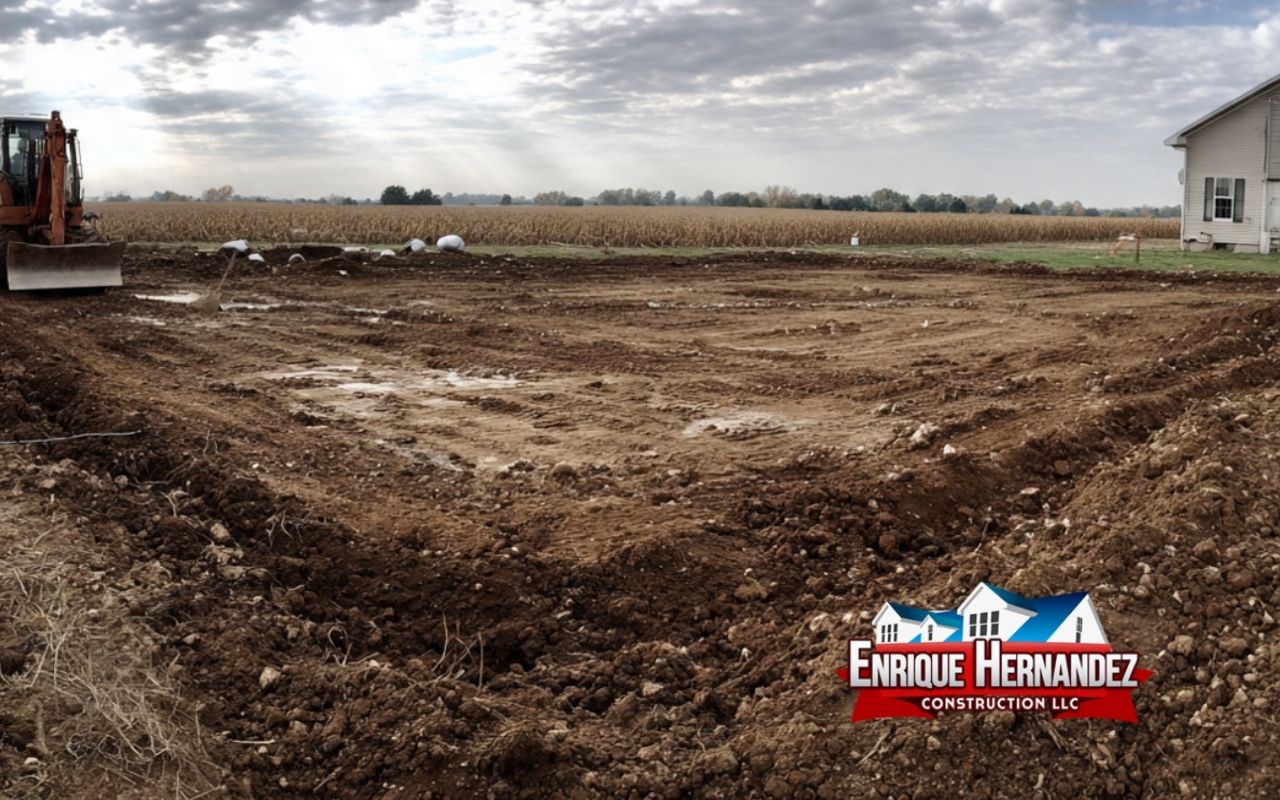
Building a home is a big step, and clay soil foundation in Indiana can feel hard at first. Still, Enrique Hernandez Construction LLC helps homeowners understand the risks and make smart choices from the start.
Clay soil can expand, shrink, and affect a home over time. However, with good planning, simple water control, and regular care, you can protect your foundation and build with more peace of mind.
Understanding Clay Soil Conditions Across Indiana Homes and Building Sites
In many areas, clay feels smooth when wet and holds water for a long time. Because of this, clay soil foundation in Indiana needs careful planning from day one with Enrique Hernandez Construction LLC.
Also, expansive clay grows when it gets wet and shrinks when it dries. Over time, this movement can push or pull a foundation and lead to cracks, uneven floors, or stuck doors.
- Clay keeps water longer than sandy soil.
- Wet clay expands and dry clay shrinks.
- Season changes can stress a foundation.
Heave vs. settlement in simple terms
Heave happens when soil pushes the foundation upward after gaining water. In contrast, settlement happens when soil dries, tightens, and lets parts of the home sink lower than before.
When homeowners know the difference between heave vs. settlement, they can spot warning signs early. As a result, Enrique Hernandez Construction LLC can suggest the right next step before the damage grows.
Common Clay Soil Problems That Affect Foundation Strength Over Time
Building on clay is more than pouring concrete and hoping for the best. Since moisture changes often, the ground may feel firm one week and shift the next.
That is why clay soil foundation in Indiana needs close attention during planning and construction. A small mistake today can turn into wall cracks, floor movement, or pipe problems later.
- Basement walls may crack.
- Floors may become uneven.
- Pipes may separate as soil moves.
Why site preparation matters so much
Good site work helps reduce future movement. First, crews clear plants, remove loose topsoil, and shape the land so water moves away from the home.
Next, builders compact soil in layers and check moisture before placing the foundation. In many cases, this early work lowers the chance of future movement and supports better soil moisture control.
Water Management Steps That Protect Clay Soil Foundation in Indiana
Water control is one of the best ways to reduce foundation trouble. For this reason, Enrique Hernandez Construction LLC often recommends simple systems that move rain away from the home.
Two helpful tools are a french drain and downspout extensions. Together, they lower the amount of water that stays near the base of the house and help support clay soil foundation in Indiana.
- Use gutters that stay clean and open.
- Add downspout extensions to move water farther away.
- Install a french drain where water collects often.
How drainage systems support stable soil
A drainage system can catch water before it sinks deep into the ground. Then, it sends that water to a safer place away from the home.
Still, every system needs regular checks. If a drain gets blocked, water may return to the foundation area and increase the risk of swelling clay and uneven movement.
Spring Maintenance Tips for Better Soil Moisture Control and Safety
Spring maintenance is a smart habit for homeowners with clay soil foundation in Indiana. After winter and early rain, small issues can start to show around the home.
Walk around the outside and look for cracks, soft ground, or low spots. At the same time, make sure gutters and downspout extensions still move water away as planned.
- Check for new cracks near doors and windows.
- Keep soil sloped away from the house.
- Watch tree roots that may dry the soil unevenly.
Frequently Asked Questions
Why is clay soil hard for foundations in Indiana?
Clay expands when wet and shrinks when dry. Because of that, the soil can move a foundation over time and cause cracks or uneven areas in the home.
What does a french drain do around a home?
A french drain collects extra water and sends it away from the foundation. As a result, less water reaches the clay, which helps reduce swelling and movement.
Are downspout extensions really important?
Yes, they are very helpful. They move roof water away from the house, which lowers the chance of wet soil building up near the foundation.
How can I improve soil moisture control?
Keep drainage working, maintain the slope around the home, and check for pooling water often. These steps help the soil stay more even through the seasons.
When should I call a professional?
Call a professional if you see cracks getting bigger, doors sticking, or floors changing shape. Enrique Hernandez Construction LLC can inspect the issue and explain the best repair path.
Choosing the Best Foundation Plan With Trusted Local Professionals
The right foundation design depends on soil tests, moisture levels, and home size. Some homes do well with reinforced slabs, while others need a different system for better support.
Enrique Hernandez Construction LLC works with skilled professionals to review each site carefully. To learn more about stopping future movement, visit How to Prevent Foundation Issues in Indiana Homes.
You can also explore Foundation Waterproofing Tips for Better Moisture Protection for added water defense, or read Slab Foundation Repair Options for Lasting Home Support if you already notice damage.
When you are ready to discuss your project, contact Enrique Hernandez Construction LLC through the Contact Enrique Hernandez Construction LLC for Foundation Help page for clear guidance and practical support.